Deployable Hyperbola
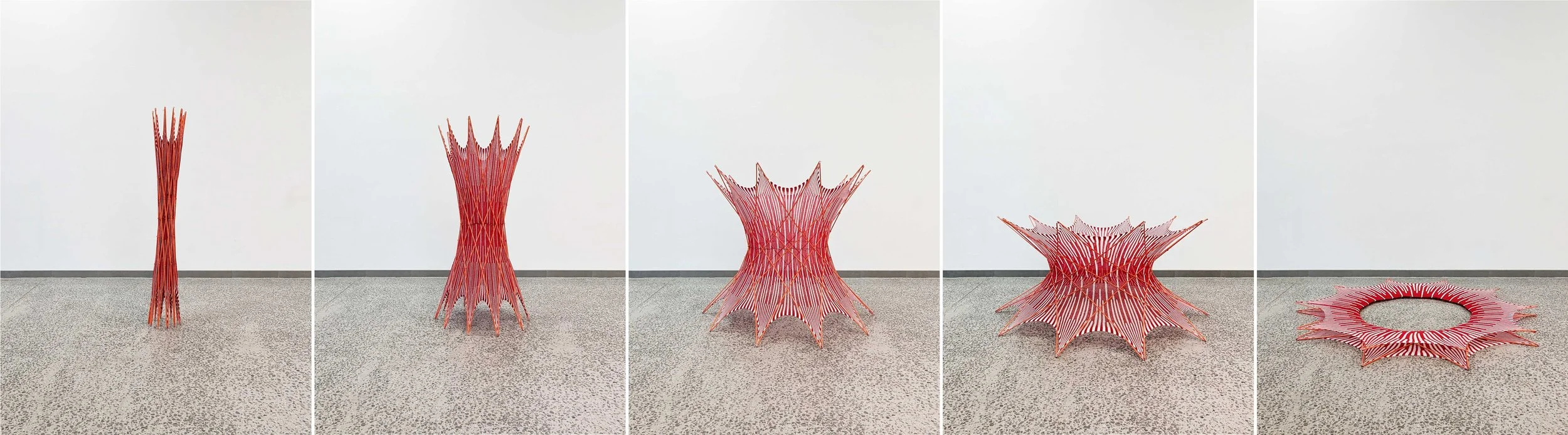
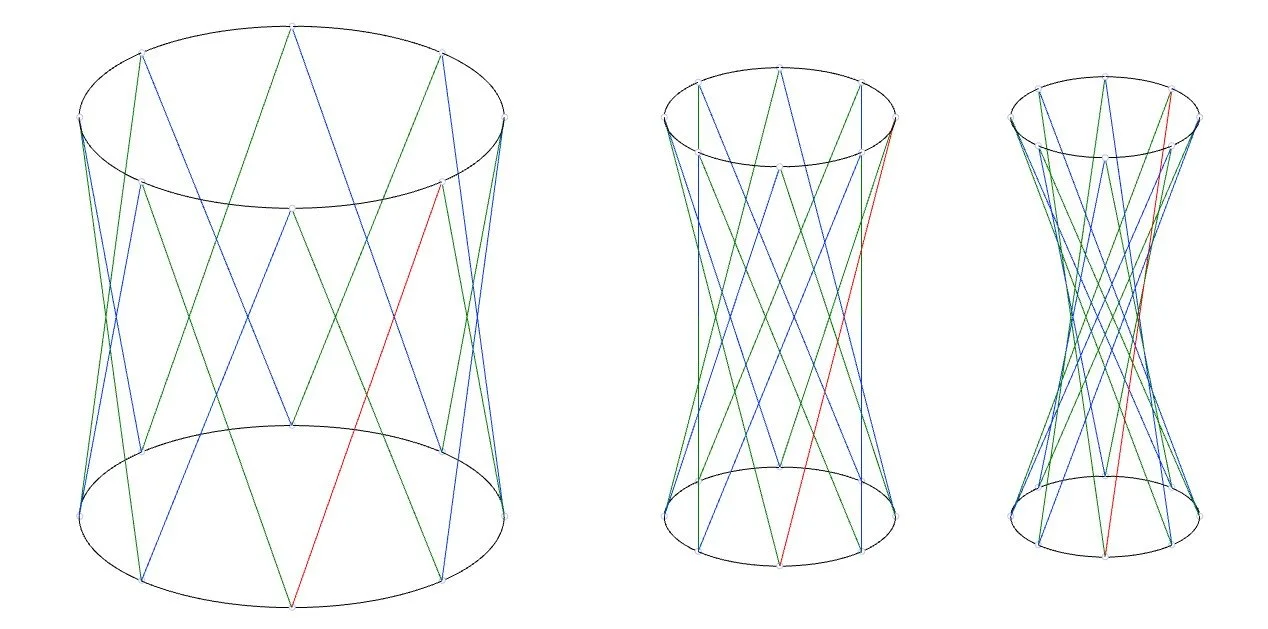
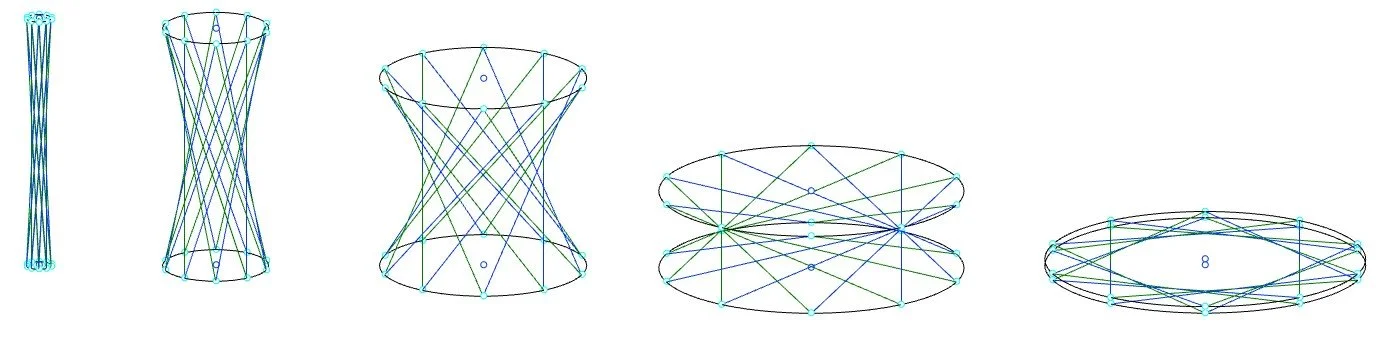
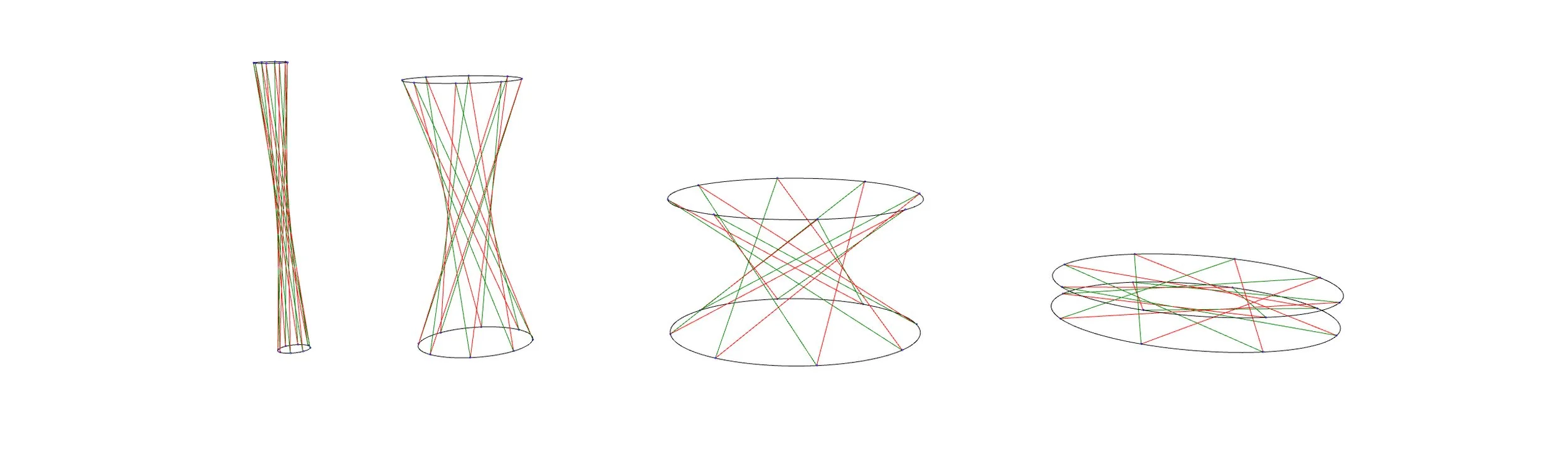
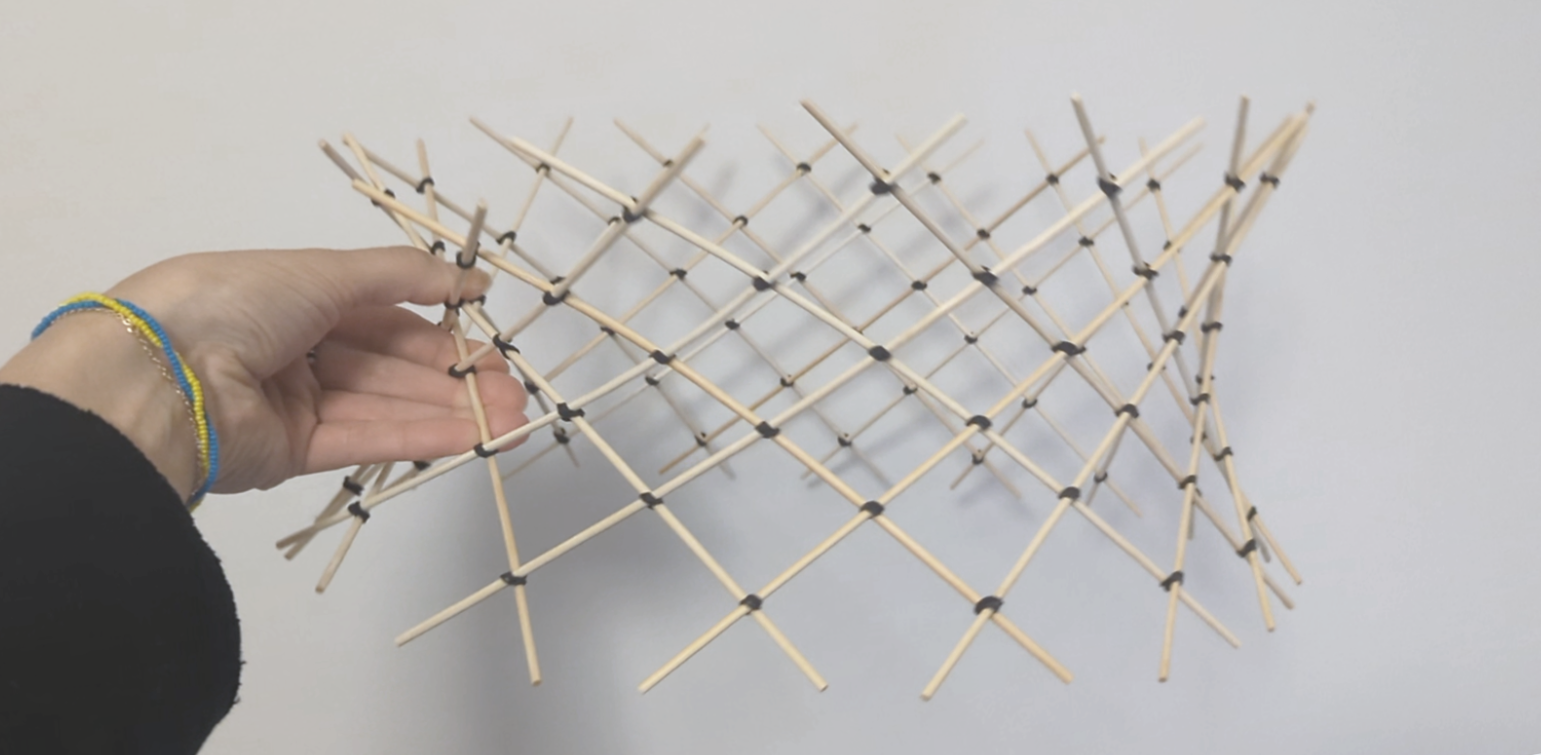
Deployable Hyperbola investigates how a knitted membrane can move with, and contribute to, a transformable structural framework. Twenty slender glass fiber rods cross to form a hyperboloid lattice. As the structure is pushed downward, its height decreases and its diameter expands, transforming from a narrow upright tower into a broad, nearly flat circle.
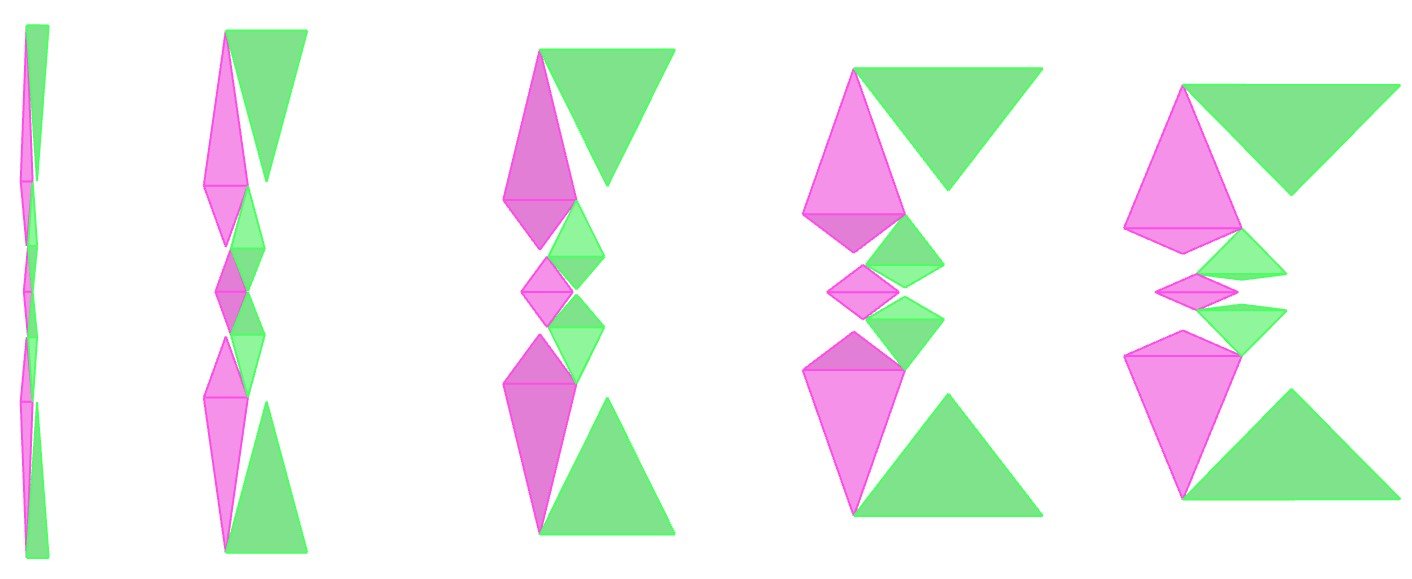
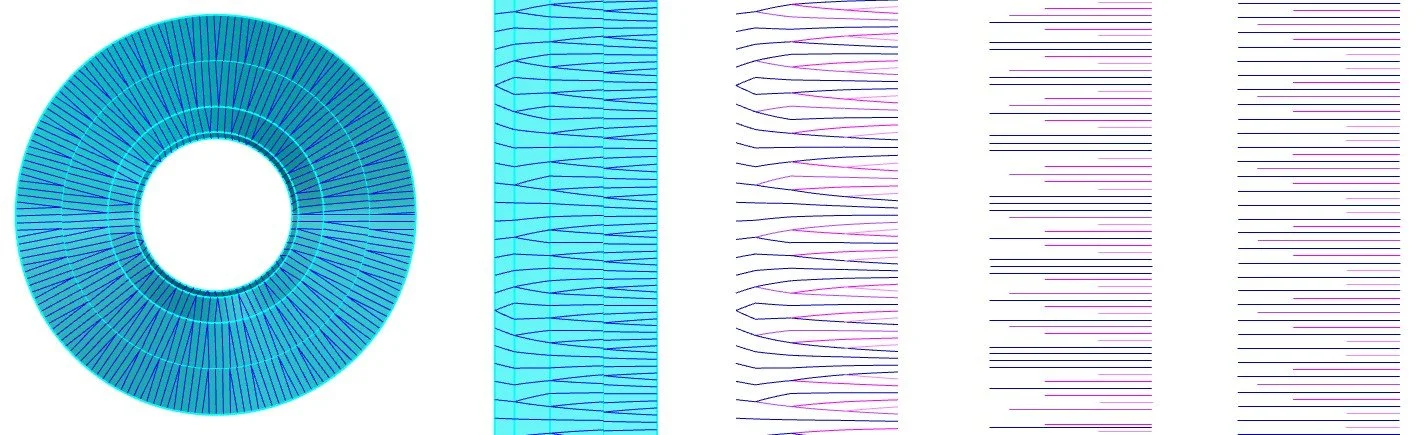
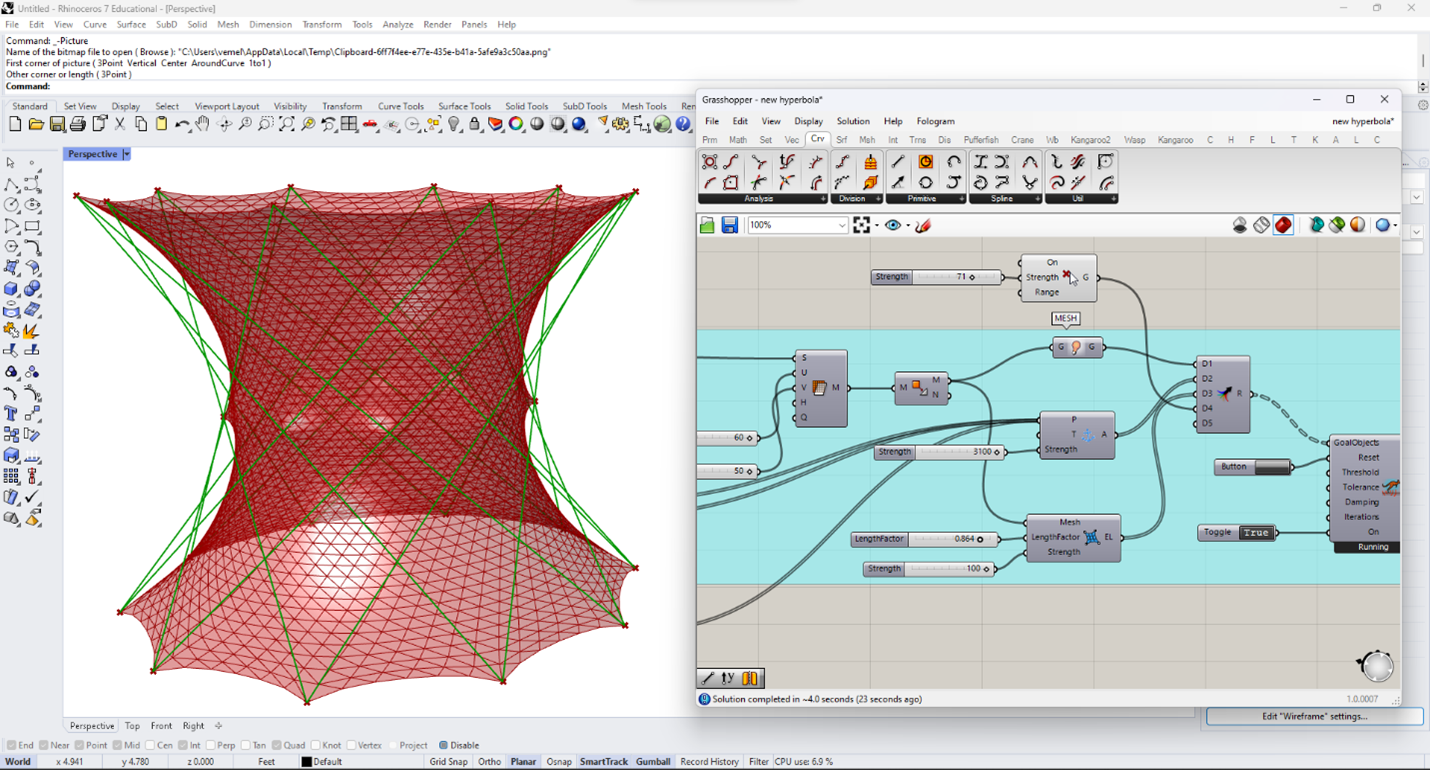
The membrane was designed for that change in geometry. Working between Rhino, Grasshopper, and physical knit samples, Melnyk studied how the spaces between the rods deform during deployment. She then developed a knitting pattern that combines acrylic yarn with elastic yarn and uses short rows to place additional stretch where the surface needs it. The textile is shaped for the framework across its range of positions, rather than fitted to only one final form.
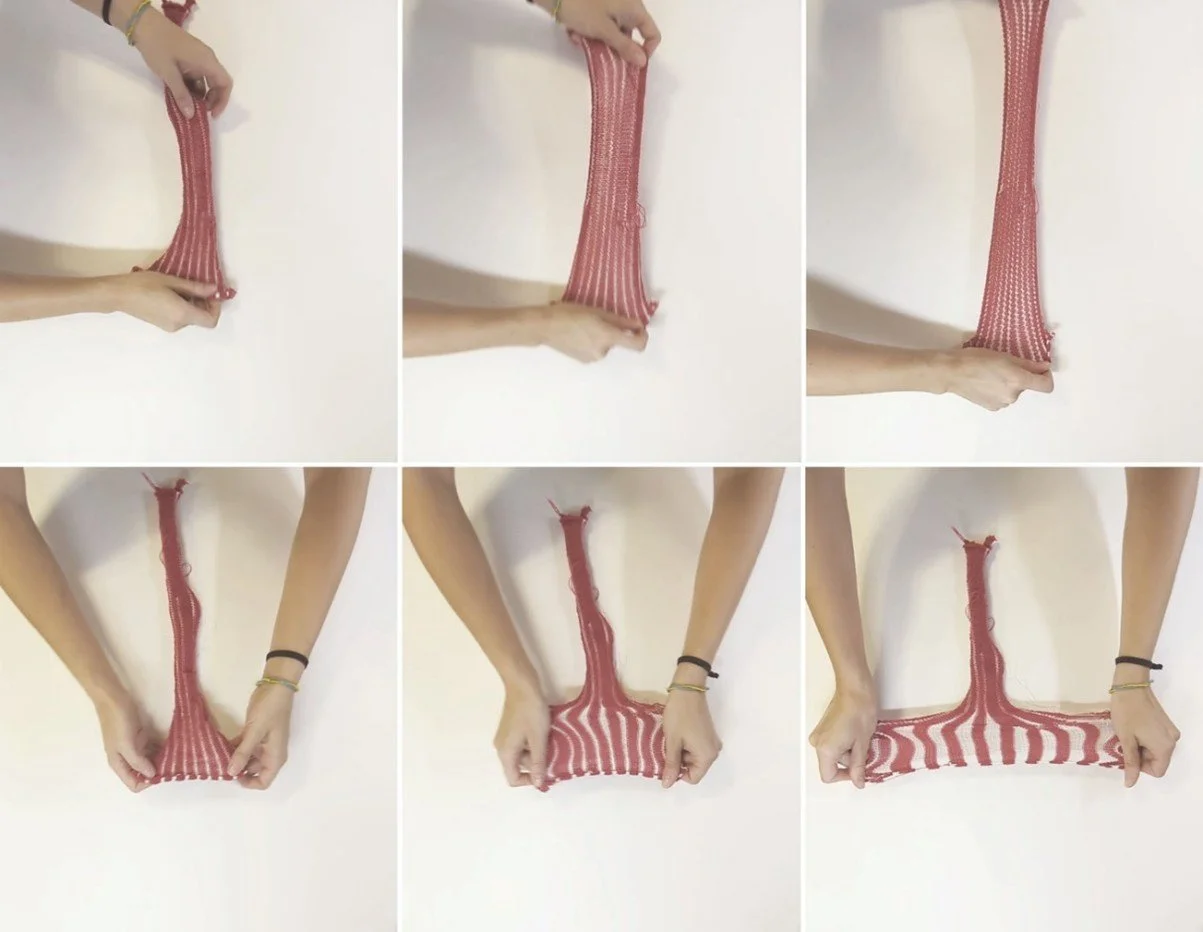
As the tower expands, the knit stretches across its width and the elastic portions become more visible. Its openings widen, changing the membrane’s transparency as well as its shape. Tension in the textile helps the structure hold intermediate positions, making the membrane an active part of the deployable system.
The design and fabrication process are documented in “Customized Knit Membrane Deployable Hyperboloid Tower,” published in Phygital Intelligence, the CDRF 2023 proceedings. This is the original single-module prototype that informed the later three- and five-stack studies. Springer Nature Link
Project information
Year: 2022
Project type: Deployable structure and knitted membrane research
Materials: Knitted acrylic and elastic yarns, glass fiber rods, elastic connections, and vinyl tubing
Dimensions: Approximately 2 m tall when upright; approximately 2 m in diameter when collapsed
Publication: “Customized Knit Membrane Deployable Hyperboloid Tower”, Phygital Intelligence, CDRF 2023 proceedings